
Publications

The Status of Women in Florida by County: Health & Well-Being

The Status of Women in Florida by County: Health & Well-Being is one in a series of four publications on women’s status across Florida’s counties commissioned by the Florida Women’s Funding Alliance, an affinity group of Florida Philanthropic Network.

By Julie Anderson|2020-08-27T01:34:43-05:00May 22, 2018|Report, Status of Women|Comments Off on The Status of Women in Florida by County: Health & Well-Being

The Economic Status of Women in Collin, Dallas, & Denton Counties, Texas

Women in Texas have made progress in recent years, but still face inequities that can prevent them from reaching their full potential. This fact sheet examines trends in Texas women’s status in the areas of employment and earnings, and poverty and opportunity.

By Julie Anderson|2020-08-27T01:36:37-05:00May 1, 2018|Fact Sheet, Status of Women|Comments Off on The Economic Status of Women in Collin, Dallas, & Denton Counties, Texas

The Economic Status of Women in the U.S. What Has Changed in the Last 20 – 40 Years

Heidi Hartmann, Ph.D. presents to the GAO.

By Heidi Hartmann|2020-08-27T02:00:57-05:00March 29, 2018|Presentation, Status of Women|Comments Off on The Economic Status of Women in the U.S. What Has Changed in the Last 20 – 40 Years

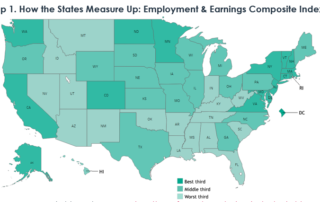
The Economic Status of Women in the States

This Fact Sheet presents findings from analysis of the Employment & Earnings Index and Poverty & Opportunity Index of The Status of Women in the States series, a comprehensive project that presents and analyzes data for all 50 states and the District of Columbia.
By Julie Anderson and Jennifer Clark|2020-08-10T04:17:28-05:00March 28, 2018|Fact Sheet, Status of Women|Comments Off on The Economic Status of Women in the States

The Status of Women in Lubbock County, Texas

This report provides critical data illuminating the status of women in Lubbock County, in terms of their civic engagement, health outcomes, vulnerability to poverty, and access to employment, education, and entrepreneurial opportunities.

By Julie Anderson and Emma Williams-Baron|2020-08-27T01:46:31-05:00March 27, 2018|Report, Status of Women|Comments Off on The Status of Women in Lubbock County, Texas

The Economic Drivers and Consequences of Sex Trafficking in the United States

Like intimate partner violence, sexual assault, and stalking, human trafficking[i] has significant economic consequences for victims. While data on the prevalence of human trafficking in the United States are scarce, due to the covert nature of the crime, some research suggests that trafficking is widespread.

By Sarah Gonzalez Bocinski|2020-09-09T14:08:49-05:00September 27, 2017|Briefing Paper|0 Comments

The Status of Black Women in the United States

This report aims to amplify the historical and current contributions of Black domestic workers to the broader domestic worker movement. Using available data, the report describes the experiences of millions of Black women across the United States, and offers recommendations where the opportunities for Black women can be realized.

By Asha DuMonthierChandra Childers and Jessica Milli|2020-08-26T12:05:39-05:00June 7, 2017|Executive Summary, Race, Ethnicity, Gender, and Economy, Report, Status of Women|Comments Off on The Status of Black Women in the United States

The Status of Women in Florida by County: Population & Diversity

This briefing paper highlights demographic information relevant to the status of women in Florida. It explores differences between women and men on a range of variables, including age, race and ethnicity, marital status, household type, immigration status, geography, and veteran status.

By Julie AndersonCynthia Hess, Ph.D. and Gina Chirillo|2020-08-27T02:10:48-05:00December 8, 2016|Briefing Paper, Status of Women|Comments Off on The Status of Women in Florida by County: Population & Diversity

Girls and Young Women of Color: Where They Are in the United States

Of the 14.1 million girls and young women of color, age 10–24, in the United States, 40.7 percent (5,748,760) live in the South, 23.2 percent in the Pacific West, 14.9 percent in the Northeast, 10.4 percent in East North Central, 7.3 percent in the Mountain West, and 3.5 percent in West North Central, as shown in Map 1.

By Emma Williams-Baron and Elyse Shaw|2020-09-09T17:05:22-05:00October 19, 2016|Briefing Paper, Race, Ethnicity, Gender, and Economy|Comments Off on Girls and Young Women of Color: Where They Are in the United States