Publications

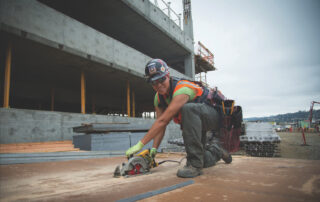
A Future Worth Building: What Tradeswomen Say about the Change They Need in the Construction Industry

Careers in the construction trades can provide high earnings and good benefits, often through a learn-while-you-earn apprenticeship. In 2020, more than 300,000 women worked in the trades—the largest number ever. Yet while their numbers are growing, women still make up fewer than one in twenty of workers in construction occupations.

By Ariane Hegewisch and Eve Mefferd|2024-06-20T09:02:08-05:00November 16, 2021|Publications|0 Comments

Build Back Better Plan will Accelerate Gender Equality, Reduce Poverty for Women and Families, and Strengthen the U.S. Care Infrastructure

The Build Back Better (BBB) Framework proposed by the Biden Administration will accelerate gender equality and significantly reduce poverty for women and families. The plan invests in women’s economic security and equity by bolstering our care infrastructure, targeted tax credits, food and nutrition assistance, and higher education and training.


By IWPR|2021-11-08T16:33:49-05:00November 5, 2021|Briefing Paper, Publications|0 Comments

Construction Workers Need Paid Leave to Rebuild the Nation

Evidence from California suggests that construction workers face the highest COVID-19 infection rates of any other sector. IWPR’s 2021 survey of tradeswomen across states shows that most construction workers who needed to take leave during COVID-19 had to do so without pay.

By Ariane Hegewisch and Eve Mefferd|2021-11-02T09:55:31-05:00October 26, 2021|Publications, Quick Figure|0 Comments

An Impossible Juggling Act: Young Parents during the COVID-19 Pandemic

The COVID-19 pandemic upended life for countless families and brought heightened attention to the plight of working parents. Mothers with young and school-aged children have borne the brunt of the care crisis in the United States, as schools and daycare centers across the country closed. Compared to fathers, mothers have been more likely to exit the labor force prematurely, become unemployed, and reduce their work hours during the pandemic (Heggeness 2020; Landivar et al. 2020).

By Shengwei Sun|2021-12-03T12:28:51-05:00August 19, 2021|Briefing Paper, Publications|0 Comments

Climbing the Leadership Ladder: Women’s Progress Stalls

What prevents women from reaching the highest rungs of the leadership ladder? This report seeks to answer this by taking a closer look at the representation of women in management and leadership positions across the United States—and the barriers that hold organizations back from achieving full gender and racial equity in leadership.

By Elyse Shaw and Jessica Milli|2021-08-09T12:47:51-05:00August 9, 2021|Publications, Report|0 Comments

Paying Today and Tomorrow: Charting the Financial Costs of Workplace Sexual Harassment

Sexual harassment remains deeply pervasive in the workplace, wreaking havoc on the lives of survivors. This report fills a gap in our knowledge of the economic costs of sexual harassment for the individual women and men who experience it. Drawing on in-depth interviews with survivors of workplace sexual harassment and stakeholder experts, and a review of the literature, the report provides a detailed pathway for capturing the financial consequences of workplace sexual harassment for individual workers in both the short term and over their lifetimes. The research is based on a collaboration between the Institute for Women’s Policy Research and the TIME’S UP Foundation and presents the first step towards identifying the data needed for a comprehensive national assessment of the financial and economic costs of sexual harassment. 

By Ariane HegewischJessica Forden and Eve Mefferd|2024-10-10T15:13:06-05:00July 21, 2021|Report|0 Comments

Tackling the Gender and Racial Patenting Gap to Drive Innovation: Lessons from Women’s Experiences

Tackling the Gender and Racial Patenting Gap to Drive Innovation: Lessons from Women’s Experiences shows the challenges women face in patenting process and provides recommendations to diversify innovation. The report highlights experiences of inventors and barriers to entry across fields and the unique difficulties women inventors—and particularly women inventors of color—face throughout the innovation and patenting process. The authors make recommendations on how to get more women and women of color in the pipeline. These include tackling systemic racial and gender bias and discrimination, investing in child care and work-life balance supports, and increasing support and funding for accelerator programs for women.

By Elyse Shaw and Halie Mariano|2021-07-19T19:32:30-05:00July 19, 2021|Briefing Paper, Publications|0 Comments