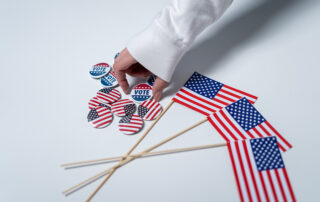
The End of the Pantsuit Nation and the Force of Subliminal Messages
Originally posted on Huffpost.com Game over. The election was the [...]
Originally posted on Huffpost.com Game over. The election was the [...]
For nearly 30 years, IWPR has analyzed and charted women’s [...]
This briefing paper assesses women’s economic status in New York state, drawing comparisons with other states in the Middle Atlantic region and the nation overall.
In advance of Latinas’ Equal Pay Day on November 1—the day symbolizing how far into the year that Latinas must work to earn what White men earned in the previous year—the Institute for Women’s Policy Research (IWPR) released an analysis finding that, if trends over the last 30 years continue, Hispanic women will not see equal pay with White men until 2248, 232 years from now.
This chartbook focuses on an area often ignored in discussions about the well-being of girls generally, and girls of color in particular—the alarming proportion of high school girls experiencing physical and sexual violence at the hands of schoolmates, friends, family members, and dating partners.
Domestic and dating violence, or intimate partner violence (IPV), is an unfortunately common reality that has short- and long-term negative effects on survivors’ economic security, and independence.
Domestic and dating violence, or intimate partner violence (IPV), is an unfortunately common reality that has short- and long-term negative effects on survivors’ economic security, and independence.
The Institute for Women’s Policy Research (IWPR) analysis of the September employment report from the U.S. Bureau of Labor Statistics (BLS) finds that women gained 56,000 jobs and men gained 100,000 jobs for a total of 156,000 jobs added in September, giving women 36 percent of job growth.
As of June 1, 2016, the Economic Security for Survivors (ESS) Project, established by WOW, will be housed at IWPR, along with many of WOW’s informational resources.
This report was prepared by International Finance Corporation as part of a work program on women’s employment in agribusiness funded by the World Bank Group’s Private Sector Window of the Umbrella Facility for Gender Equality.