Ariane Hegewisch, M.Phil.

About Ariane Hegewisch

Ariane Hegewisch is Program Director of Employment and Earnings at IWPR and Scholar in Residence at American University; prior to that she spent two years at IWPR as a scholar-in-residence. She came to IWPR from the Center for WorkLife Law at UC Hastings. She is responsible for IWPR’s research on workplace discrimination and is a specialist in comparative human resource management, with a focus on policies and legislative approaches to facilitate greater work life reconciliation and gender equality, in the US and internationally. Prior to coming to the USA she taught comparative European human resource management at Cranfield School of Management in the UK where she was a founding researcher of the Cranet Survey of International HRM, the largest independent survey of human resource management policies and practices, covering 25 countries worldwide. She started her career  in local economic development, developing strategies for greater gender equality in employment and training in  local government in the UK. She has published many papers and articles and co-edited several books, including ‘Women, work and inequality: The challenge of equal pay in a deregulated labour market”. She is German and has a BSc in Economics from the London School of Economics and an MPhil in Development Studies from the IDS, Sussex.


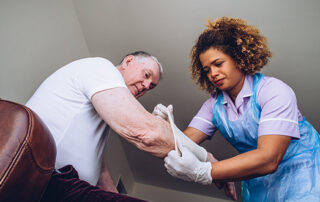
The Future of Care Work: Improving the Quality of America’s Fastest-Growing Jobs

Paid adult care work jobs are expected to increase substantially in the coming years, due to both an aging population and a comparatively low risk of automation for many of these jobs.

By  and |2025-01-27T19:24:15-05:00September 23, 2019|Equitable Work and Wages|Comments Off on The Future of Care Work: Improving the Quality of America’s Fastest-Growing Jobs

Women, Automation, and the Future of Work (Executive Summary)

According to Women, Automation, and the Future of Work, an Institute for Women’s Policy Research (IWPR) report, technological change will affect men and women differently in a number of ways. The first study of its kind in the United States, this report estimates the risk of automation across occupations by gender and presents a comprehensive picture of what we know—and what we don’t—about how the future of work will affect women workers.

Women Gain Jobs in Construction Trades but Remain Underrepresented in the Field

Between 2017 and 2018, the number of women working in construction trades increased by 17.6 percent, rising to well over a quarter of a million women (276,000).[1] This is substantially higher than job growth of 3.7 percent in construction occupations overall.

By |2025-01-27T19:24:17-05:00March 28, 2019|Equitable Work and Wages|0 Comments

Retail Occupations: Few Signs of Employment Decline but Increasing Precarity

One in eleven U.S. workers work in retail jobs, close to 13 million workers in 2014-16. Occupations in the retail sector include Retail Salespersons, Cashiers, and Stock Clerks and Order Fillers, but also Advertising Agents, Telemarketers, and Models and Product Promoters.

By  and |2025-01-27T19:24:17-05:00March 13, 2019|Equitable Work and Wages|Comments Off on Retail Occupations: Few Signs of Employment Decline but Increasing Precarity

Women Only Pre-Apprenticeship Programs: Meeting Skills Needs and Creating Pathways to Good Jobs for Women

The average salary for someone who completed an apprenticeship is $60,000 per year. The average salary of an electrician (the most common apprenticeship) on completion of an apprenticeship is $23 per hour; for a 40-hour week this translates to $920, substantially higher than the median weekly earnings for a worker with an Associate degree (of $836 in 2017).

By  and |2025-01-27T19:24:17-05:00October 15, 2018|Equitable Work and Wages|0 Comments

Sexual Harassment and Assault at Work: Understanding the Costs

Through a review of the current literature on sexual harassment and assault, this briefing paper highlights how workplace sexual harassment and assault affect women’s economic advancement and security, and the costs of these harms to employers (including estimates of financial losses where available). It also provides recommendations for preventing sexual harassment and reducing the negative effects of harassment for individuals and workplaces.

By  and |2021-08-04T19:03:27-05:00October 15, 2018|Briefing Paper|0 Comments