
Briefing Paper

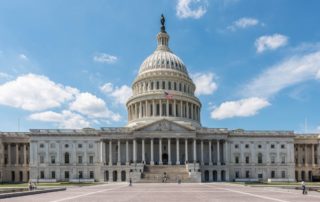
Gender Political Parity in the U.S. Congress: Women Will Wait 88 Years before Achieving Equal Representation

DOWNLOAD REPORT Women are a vital and integral [...]

By Elyse Shaw|2020-11-03T17:35:15-05:00March 5, 2020|Briefing Paper, IWPR|Comments Off on Gender Political Parity in the U.S. Congress: Women Will Wait 88 Years before Achieving Equal Representation

Women of Color in Economics and Sociology: Poor Climate, Unequal Treatment, and Lack of Legitimacy

A recent survey by the American Economics’ Association (AEA), for example, revealed widespread gender and racial discrimination in the field, with nearly half of women reporting unequal treatment, including sexual harassment and failure to take their work seriously (American Economic Association 2019).

By Roberta Spalter-Roth and Amber Kalb|2020-08-10T03:21:09-05:00August 6, 2019|Briefing Paper, Race, Ethnicity, Gender, and Economy|Comments Off on Women of Color in Economics and Sociology: Poor Climate, Unequal Treatment, and Lack of Legitimacy

Sexual Harassment and Assault at Work: Understanding the Costs

Through a review of the current literature on sexual harassment and assault, this briefing paper highlights how workplace sexual harassment and assault affect women’s economic advancement and security, and the costs of these harms to employers (including estimates of financial losses where available). It also provides recommendations for preventing sexual harassment and reducing the negative effects of harassment for individuals and workplaces.

By Elyse ShawAriane Hegewisch and Cynthia Hess, Ph.D.|2021-08-04T19:03:27-05:00October 15, 2018|Briefing Paper|0 Comments

The Economic Drivers and Consequences of Sex Trafficking in the United States

Like intimate partner violence, sexual assault, and stalking, human trafficking[i] has significant economic consequences for victims. While data on the prevalence of human trafficking in the United States are scarce, due to the covert nature of the crime, some research suggests that trafficking is widespread.

By Sarah Gonzalez Bocinski|2020-09-09T14:08:49-05:00September 27, 2017|Briefing Paper|0 Comments

The Status of Women in Florida by County: Population & Diversity

This briefing paper highlights demographic information relevant to the status of women in Florida. It explores differences between women and men on a range of variables, including age, race and ethnicity, marital status, household type, immigration status, geography, and veteran status.

By Julie AndersonCynthia Hess, Ph.D. and Gina Chirillo|2020-08-27T02:10:48-05:00December 8, 2016|Briefing Paper, Status of Women|Comments Off on The Status of Women in Florida by County: Population & Diversity

Girls and Young Women of Color: Where They Are in the United States

Of the 14.1 million girls and young women of color, age 10–24, in the United States, 40.7 percent (5,748,760) live in the South, 23.2 percent in the Pacific West, 14.9 percent in the Northeast, 10.4 percent in East North Central, 7.3 percent in the Mountain West, and 3.5 percent in West North Central, as shown in Map 1.

By Emma Williams-Baron and Elyse Shaw|2020-09-09T17:05:22-05:00October 19, 2016|Briefing Paper, Race, Ethnicity, Gender, and Economy|Comments Off on Girls and Young Women of Color: Where They Are in the United States

Women of Color: Where They Are in the United States

Of the 42.3 million women of color, age 18 and older, in the United States, 41.5 percent (17,537,563) live in the South, 23.2 percent in the Pacific West, 16.3 percent in the Northeast, 9.8 percent in East North Central, 6.4 percent in the Mountain West, and 2.9 percent in West North Central.

By Emma Williams-Baron and Elyse Shaw|2020-09-09T17:09:42-05:00October 19, 2016|Briefing Paper, Race, Ethnicity, Gender, and Economy|Comments Off on Women of Color: Where They Are in the United States

Poverty, Gender, and Public Policies

Over the last few decades, women’s increased labor force participation, education, and earnings have helped many women attain economic security. Yet, a substantial number of women in the United States face economic hardship.

Increasing Pathways to Legal Status for Immigrant In-Home Care Workers

This paper explores options for reforming the U.S. visa system to increase the pathways to legal status for undocumented immigrant women interested in providing long-term care for the elderly and for individuals with disabilities and chronic illnesses.

By Cynthia Hess, Ph.D. and Jane Henrici|2021-05-07T14:28:59-05:00February 11, 2013|Briefing Paper, IWPR, Publications|Comments Off on Increasing Pathways to Legal Status for Immigrant In-Home Care Workers