Equitable Work and Wages
We believe that economic justice begins with fair compensation for all women, and we build evidence to support equal pay policies, livable wages, unions and labor rights, and better job quality for women and their families.






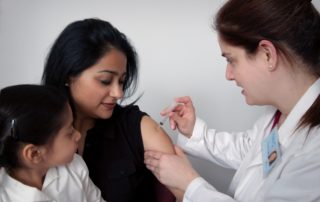
Paid Sick Days Access and Usage Rates Vary by Race/Ethnicity, Occupation, and Earnings
Utilizing data from the 2014 National Health Interview Survey (NHIS), this briefing paper estimates the proportion of public and private sector workers ages 18 and older with access to paid sick days, and their use of paid sick days, by race and ethnicity, immigration status, occupation, earnings, job level (supervisor/nonsupervisory status), and other demographic and occupational characteristics.

Testimony before the Council of the District of Columbia Committee of the Whole regarding Bill 21-415, Universal Paid Leave Act of 2015
Testimony before the Council of the District of Columbia Committee of the Whole regarding Bill 21-415, Universal Paid Leave Act of 2015, presented on January 14, 2016.
Women and Men Share Stronger Job Gains in December—Women’s Unemployment Rate Is at 4.8 Percent; Men’s at 5.2 Percent
The Institute for Women’s Policy Research (IWPR) analysis of the January employment report from the U.S. Bureau of Labor Statistics (BLS) finds that women gained 141,000 jobs and men gained 151,000 for a total of 292,000 jobs added in December.
The Union Advantage for Women
This briefing paper presents an analysis of women’s union membership and the union wage and benefit advantage for women by state and by race/ethnicity. It is based on an analysis of the Current Population Survey. Wage and benefit data are for all workers covered by a union contract, irrespective of their membership in a union.
