Education and Career Advancement

Education is a cornerstone of economic security, and we are committed to breaking down barriers to advancement. We
research student parents, career training opportunities through apprenticeships and workforce development, and other policies that reduce student debt and make college more accessible for women, particularly women of color

“Nevertheless, I Persisted and Graduated”: A Single Mom’s Journey

This guest blog post is authored by Zoe Erickson in collaboration with IWPR’s Student Parent Success Initiative. Zoe graduated with her Bachelor's degree in June 2020 from Portland State University and is expected to obtain her Master of Public Policy at Portland State University by June 2022. Zoe is also a recipient of services of the Resource Center for Students with Children program at Portland State University.

By Zoe Erickson|2025-01-28T22:41:41-05:00August 24, 2021|Education and Career Advancement|0 Comments

Leveraging Head Start for Student Parent Families

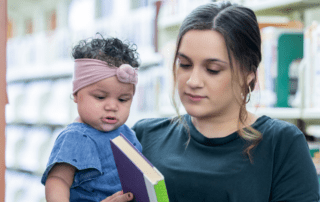
Student parents face significant challenges that can limit their ability to enter, persist in, and graduate from college. Innovative partnerships between Head Start and the higher education system is a promising strategy to bring together essential supports to meet the needs of student parents and set them up for long-term success. This briefing paper explores what this partnership might look like, and how federal and state policy could encourage greater support for student parents and their families through Head Start.

“The Pandemic Was Not Going to Stop Me”: A Student Parent Reflects on Struggles, and Success, during COVID

This guest blog post is authored by Jessica Vera, a [...]

By Jessica Vera|2025-01-28T22:41:41-05:00July 30, 2021|Education and Career Advancement|0 Comments

Re-Engaging Student Parents to Achieve Attainment and Equity Goals

In recent years, the goal of 60 percent of adults holding a postsecondary degree has been set as a key benchmark for the United States to build a skilled workforce and remain economically competitive. Engaging adults with some college credit but no degree is critical to reaching this goal.

Head Start-College Partnership to Promote Student Parent Family Success: A Roadmap to Guide Collaboration

Collaboration between colleges and Head Start programs holds promise for promoting the educational and economic well-being of college students with young children. Roughly one million undergraduate student parents with children under age six are income-eligible for Head Start, and their ability to complete their educational programs is linked to their access to affordable sources of early care and learning for their children. [...]

By IWPR|2025-01-28T22:41:42-05:00June 8, 2021|Education and Career Advancement|0 Comments

The Student Parent Equity Imperative: Guidance for the Biden-Harris Administration

As the Biden-Harris administration seeks to hasten the country’s recovery from the COVID-19 pandemic, reforming the U.S. higher education system to ensure equitable access and attainment for all adults is more important than ever. The pandemic has disproportionately increased the caregiving, financial, and emotional burdens on student parents and their families—most of whom are mothers, students of color, adult and working learners, students with low incomes, and first-generation students [...]

Busy with Purpose: Lessons for Education and Policy Leaders from Returning Student Parents

Postsecondary attainment is widely recognized as key to accessing living-wage careers—in addition to fulfilling workforce demands and elevating the United States’ standing on the world stage. While much of the work to increase attainment rates has recognized the role of reengaging adults who have some college credit, but no degree or certificate, less attention has been paid to the salience of parenthood in adults’ postsecondary experiences.

Centering the Student Voice: Community Colleges and Sexual and Reproductive Health Access in Texas and Mississippi

Community college students’ lives outside of the classroom—including their sexual and reproductive health— can directly impact their ability to succeed in school, yet most community colleges do not provide sexual and reproductive health services (Bernstein and Reichlin Cruse 2020). Growing efforts to implement holistic approaches to student success also often ignore the role that sexual and reproductive health outcomes can play students’ academic careers.