
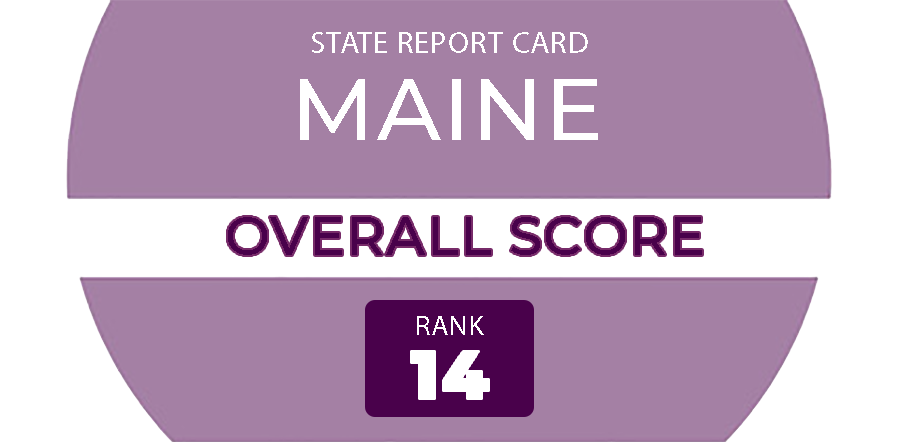
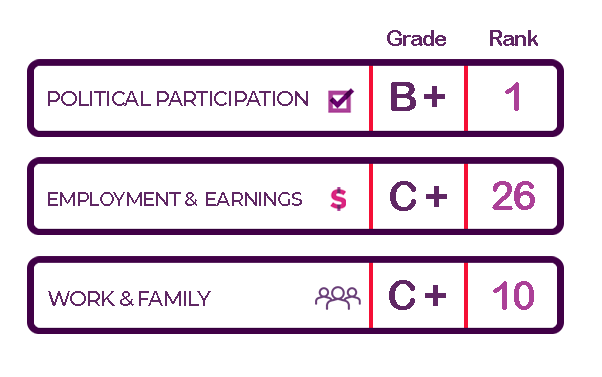
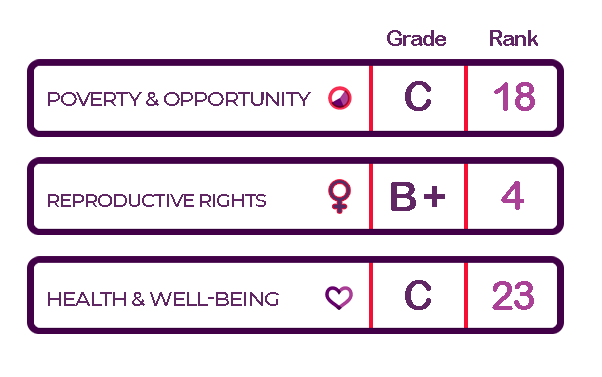
The Status of Women in the States project ranks and grades Maine across several areas of women’s lives. While Maine performs better in some areas, no matter the rank, there are still barriers and inequities that prevent women from succeeding and thriving. Across all indices, Maine ranks toward the top of states in the country. Maines’s performance is the strongest on the Political Participation and Reproductive Rights indices. Maines’s performance is weakest on the Employment and Earnings and the Health and Well-Being indices.
Explore the Data
As state policies and programs have changed over the years, so has the status of women in Maine. Since 1996, Maine has made progress in some areas, while lagging in others.
Articles and Publications

The Status of Women in the South
The Status of Women in the South builds on IWPR’s long-standing analyses and reports, The Status of Women in the States, that have provided data on the status of women nationally and for all 50 states plus the District of Columbia since 1996. The Status of Women in the South uses data from U.S. government and other sources to analyze women’s status in the southern United States, including Alabama, Arkansas, the District of Columbia, Florida Georgia, Kentucky, Louisiana, Mississippi, North Carolina, South Carolina, Tennessee, Texas, Virginia, and West Virginia.
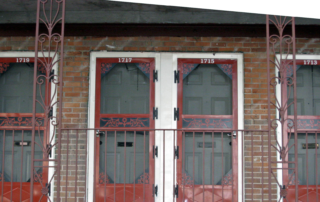
Get to the Bricks: The Experiences of Black Women from New Orleans Public Housing After Hurricane Katrina
Get to the Bricks: The Experiences of Black Women from New Orleans Public Housing After Hurricane Katrina presents the results of qualitative research conducted with 184 low-income black women who lived in public housing prior to Hurricane Katrina and the flooding of New Orleans, and who were displaced by the hurricane and the closure and demolition of their housing.

The Status of Women in the States: 2015
The Status of Women in the States: 2015 provides critical data to identify areas of progress for women in states across the nation and pinpoint where additional improvements are still needed. It presents hundreds of data points for each state across seven areas that affect women’s lives: political participation, employment and earnings, work and family, poverty and opportunity, reproductive rights, health and well-being, and violence and safety.
