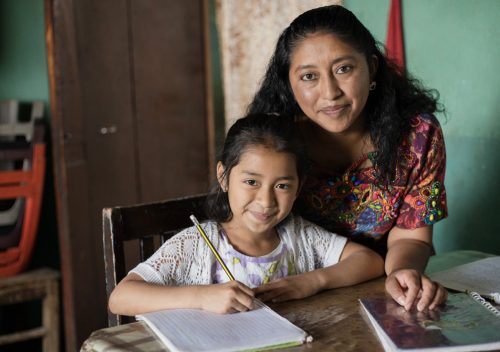
This September marks the sixth annual National Student Parent Month—an opportunity to recognize the lived experiences of parenting students, explore critical policy solutions to support them, and give particular attention to the challenges faced by Black student mothers.
Higher education institutions are built to support the idea of a “traditional student,” someone who just graduated high school with no caregiving responsibilities and ample free time outside classes. This, however, is not the case for nearly 1 in 5 undergraduate students (18 percent) who have dependent children while enrolled in college. This rate is even higher—over 1 in 3 (35 percent)—among undergraduate Black female students. Community and technical colleges in particular have an important role to play in student parents’ success, as nearly half of all student parents (51 percent), including Black parenting students (46 percent), attend these institutions.
Making Quality Child Care Affordable and Accessible to Student Parents
While Title IX of the Education Amendments Act of 1972 protects parenting students’ rights to equal education access and reasonable accommodations, many students misunderstand these rights. Crucially, the civil rights law provides little relief if parents are struggling to afford to be in the classroom while managing the expenses of raising a child. Financial insecurity is a significant concern among parenting students, although it disproportionately impacts Black student mothers, who take out more student loansthan other student parents.
This hardship is compounded by the rising cost of child care, which has outpaced inflation and wage growth for years. According to IWPR’s State Policy Action Lab (State PAL), center-based infant care costs more than a third of Black women’s median income per year among those working full time year-round. Alarmingly, student parents attending public college in 38 states and Washington, DC, pay more for their infant’s child care than their own college tuition. Meanwhile, the number of community college campuses offering child care has dropped by nearly 17 percentage points since the early 2000s. IWPR research has documented the need for affordable on-campus child care for Black single mother students that offers flexible care hours to account for in-person exams, daycare closures, and evening classes.
Despite the proven economic benefits of investing in early childhood programs, the Trump administration’s fiscal year 2027 budget request proposed eliminating the Child Care Access Means Parents in School (CCAMPIS) program, which awards four-year grants to over 260 colleges and universities to offer child care to low-income students. Additionally, the administration has proposed drastic reforms to the Head Start program, including removing requirements around staff-to-student ratios and safety standards, which help ensure quality care. These changes are part of the administration’s long-term plan to eliminate Head Start, despite evidence that the program provides high-quality, affordable early learning opportunities alongside wraparound supports for parents.It is imperative that higher education institutions work with state policymakers and other community leaders to fill this gap by providing the child care support their students need and building longer-term care solutions.
Prioritizing Student Parent Data Collection to Provide Tailored Support
Student parent data collection varies drastically across colleges and states and is often not sufficiently prioritized—if it’s conducted at all. In addition to measuring student parent retention and degree attainment rates, investing in understanding the needs and experiences of parenting students would help colleges make the case for targeted, culturally responsive improvements to child care, family housing, and instructional policies.
Just this year, Virginia and Maryland joined California, Illinois, Minnesota, Oregon, and Texas in passing student parent data collection laws. We are already seeing some benefits from better student parent data: After conducting a campus-wide survey, Virginia State University expanded its student parent housing, created child-friendly study rooms, and prioritized affordable child care in response to concerns raised by its parenting students.
Higher education institutions have a responsibility to the students who show up to earn a degree—including the 35 percent of Black female students who are parents—to more actively share information on Title IX protections for parenting students and to create policies and support systems that help them succeed. As federal policies threaten supports for student parents, this year’s National Student Parent Month serves as a reminder for stakeholders, higher education institutions, and states to step in and commit to all students’ success.
Learn more about the unique challenges facing parenting students and additional ways to support them in IWPR’s Federal Policy Solutions to Advance Gender Equity Supporting Student Parents brief.
This blog was prepared by Anjali Nair with contributions from Dr. Afet Dundar, Emily Maistrellis, and Dr. Jennifer Turner.
Student parents and other nontraditional college students face unique challenges to academic success and degree attainment, including financial barriers, managing work, school, and family responsibilities, and a lack of support services.