Access to Paid Sick Time in Dallas, Texas
Approximately 41 percent of workers in Dallas lack paid sick time, and low-income and part-time workers are especially unlikely to be covered. Access to paid sick time promotes safe and healthy work environments by preventing the spread of illness (Kumar, et al. 2013; Drago and Miller, 2010) and reducing workplace injuries (Asfaw, Pana-Cryan, and Rosa 2012), reducing health care costs (Miller, Williams, and Yi 2011), allowing workers time to visit doctors, and helping working adults fulfill caregiving responsibilities by reducing work-family conflict (Allen, et al. 2014; DeRigne, Stoddard-Dare, and Quinn 2016). This briefing paper presents estimates of access to paid sick time in Dallas by sex, race and ethnicity, employment sector, occupation, part/full-time employment status, and earnings levels through analyses of government data sources, including the 2014–2016 National Health Interview Survey (NHIS) and the 2016 American Community Survey (ACS).
Access to Paid Sick Time by Sex and Racial/Ethnic Group
- Among workers in Dallas, 59 percent have access to paid sick time (Figure 1), and 41 percent, or about 302,000 workers, lack access (Table 1).[1]
- Hispanic and Black workers are less likely to have paid sick time than workers in any other racial/ethnic group (Figure 1): 55 percent of Hispanic and 37 percent of Black workers lack access to paid sick time, compared with 31 percent of White workers, 33 percent of Asian workers, and 34 percent of workers of some other or two or more races (Table 1).
- State and local government workers are much more likely than private sector workers to have paid sick time: 85 percent of state and local government workers have access to paid sick time in Dallas, compared with 57 percent of private sector workers (Figure 1).
Access to paid sick time varies widely depending on the type of job employees hold. Across the broad spectrum of occupations in Dallas, access to paid sick time varies from a high of 86 percent for ‘Computer, Engineering, and Science’ occupations, to only 34 percent for those employed in ‘Natural resources, construction, and maintenance’ occupations (Figure 2).
Worker access to paid sick time is particularly low in jobs that require frequent contact with the public, like food preparation and personal care occupations (jobs within the ‘Service’ occupations category; Figure 2), which has important public health implications due to risk of contagion. In addition, child care workers and personal care aides—also jobs within the ‘Service’ occupations category—work with populations that are uniquely vulnerable to illness, such as infants and young children and older adults, for whom the spread of illness can have severe health consequences. Workers in service occupations also tend to earn low wages (Bureau of Labor Statistics 2017), which makes it difficult for them to afford to take unpaid time off when they or a family member are sick.
Access to Paid Sick Time by Hours Worked
- Paid sick time is particularly rare for part-time workers (those who work fewer than 35 hours per week). Only 23 percent of part-time workers in Dallas have access to paid sick time (Figure 3). These workers are also especially likely to be working in service occupations where access rates also tend to be low.[2]
- Among those who work 40 hours a week or more, 66 percent have access to paid sick time in Dallas (Figure 3).
Access to Paid Sick Time by Earnings Level
Low-paid workers in Dallas are far less likely than higher earners to have access to paid sick time. This means that those who can least afford to take an unpaid day off are also least likely to be covered.
- 30 percent of full-time workers in the lowest earnings bracket (less than $15,000 annually) have access to paid sick time (Figure 4).
- 85 percent of workers in the highest earnings bracket ($65,000 or more annually) have access to paid sick time (Figure 4).
Benefits of Paid Sick Time
Paid sick time delivers multiple benefits for employers, children, women, and communities at large. The economic and public health benefits of paid sick time coverage are substantial, including stronger, safer work environments; improved child and family health and well-being; and reduced health care costs (Milli, Xia, and Min, 2016).
Stronger, Safer Work Environments
- Research documents that workers without access to paid sick time are three times more likely to forgo treatment for themselves and almost two times more likely to forgo care for a family member compared with workers who have paid sick time (DeRigne, Stoddard-Dare, and Quinn 2016).
- Employers who provide paid sick time report fewer occupational injuries among employees than those who do not have paid sick time coverage (Asfaw, Pana-Cryan, and Rosa 2012).
- Paid sick time policies help reduce the spread of illness in the workplace by making it possible for contagious workers to stay home (Kumar, et al. 2013) and for families to self-quarantine without concerns about lost wages or job loss (DeRigne, Stoddard-Dare, and Quinn 2016). Using Google Flu data from 2003 to 2015, researchers demonstrated that influenza-like infection rates decrease by about 10 percent when employees without coverage were provided with paid sick time (Pichler and Ziebarth 2015).[3]
- Workers with access to paid sick time are more likely to receive preventative care such as the influenza vaccine (Wilson, Wang, and Stimpson 2014). These preventive measures benefit both employers and co-workers; for example, the flu vaccine reduces work absences and the need for healthcare visits (Wilson, Wang, and Stimpson 2014).
Supporting Children and Families
- Paid sick time policies help parents fulfill their caregiving responsibilities. Research shows that about a third of parents with young children are concerned about lost wages or job loss resulting from caring for a sick child and report that they do not receive enough paid time off to care for their children (University of Michigan C.S Mott Children’s Hospital 2012). Access to paid sick time is also uniquely important to women, as research indicates that mothers stay home to care for sick children far more often than fathers (74 percent of working mothers compared with 40 percent of working fathers report staying home to care for a sick child; Smith and Schaefer 2012). A 2011 Gallup poll found that most caregivers, including parents, reported missing at least one full day of work to fulfill their caregiving duties, with an average of 6.6 workdays missed per year (Witters 2011).
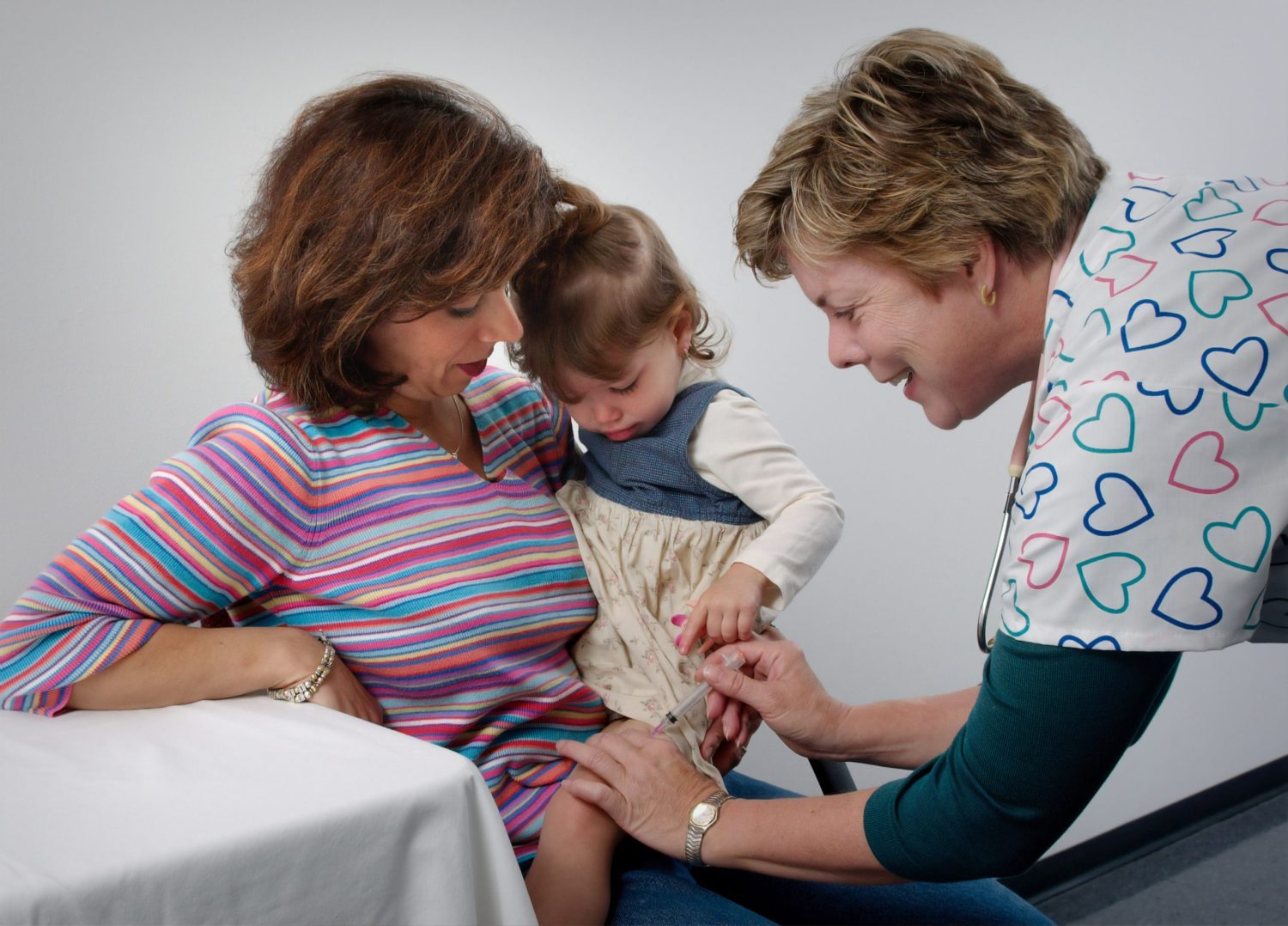
- Paid sick time can inhibit the escalation of illness and reduce the transmission of contagious diseases in schools and child care centers by allowing parents to stay home with sick children. The Centers for Disease Control and Prevention reports that children ages five and younger face a higher risk of experiencing complications from the flu, which can result in hospitalization and even death (Centers for Disease Control and Prevention n.d.). Paid time away from work helps parents address their children’s health needs, such as medical care to prevent health complications, well-child doctor visits, and regularly scheduled treatments like vaccinations, or management of a chronic illness or disability (Hamman 2011; DeRigne, Stoddard-Dare, and Quinn 2016).
- Paid sick time gives adult children and family members the time to care for elderly, disabled, and medically fragile relatives. AARP reports that in 2013 about 40 million family caregivers provided approximately 37 billion hours of care, and that 60 percent of family caregivers are employed either full-time or part-time. The report argues that paid sick days would help these employees meet both their caregiving and work demands (Reinhard et al. 2015).
Reducing Health Care Costs
- Workers with paid sick time are more likely to take preventative measures that can lead to early detection and treatment of illness, which reduces medical expenses. A 2012 study using 2008 National Health Interview Survey (NHIS) data found that after controlling for demographic differences and health insurance coverage, workers with paid sick time are significantly more likely to have had mammograms, Pap tests, and endoscopies, and to have seen a doctor during the previous year than those without coverage (Peipens et al. 2012).
- Paid sick time allows people to take time away from work for medical appointments, rather than waiting until after work hours, when they are more likely to use costly hospital emergency services. Analyses of data from the National Health Interview Survey shows that workers with paid sick time are less likely than other workers to use hospital emergency departments, even after accounting for variables such as age, income, education, and type of health insurance (Miller, Williams, and Yi 2011). Another research study finds that, after controlling for differences in demographic and health characteristics of workers, those with paid sick time are less likely to visit emergency departments—people are 14 percent less likely to be moderate users (one to three visits per year) and 32 percent less likely to be repeated users (four or more times a year) of the emergency department when they have access to paid sick leave (Bhuyan et al. 2016).
Conclusion
A large share of Dallas workers lack access to paid sick time, with coverage unequally distributed by race/ethnicity and occupation. Low paid sick time coverage among workers who have regular contact with the public (such as food preparation workers and servers), and who interact with vulnerable populations (such as personal care workers), is especially problematic from a public health standpoint. The results of this analysis indicate that increased access to paid sick time in Dallas would disproportionately benefit Hispanic, Black, low-wage, and part-time workers, and reduce contagion and health care costs within the state.
Notes
[1] Throughout this briefing paper, the total workforce includes private sector workers as well as workers in the state or local governments, but excludes federal workers, self-employed workers, and members of the armed forces.
[2] Unpublished IWPR analysis of 2013 American Community Survey data (Integrated Public Use Microdata Series, Version 5.0).
[3] These researchers compared the rates of influenza-like illnesses in regions with paid sick days policies – including the District of Columbia, Connecticut, California, Massachusetts, and Oregon (Pichler and Ziebarth 2015).
References
Allen, Tammy D, Laurent M. Lapierre, Paul E. Spector, Steven A.Y. Poelmans, Michael O’Driscoll, Juan I. Sanchez, Cary L. Cooper, Ashley Gray Walvoord, Alexandros-Stamatios Antoniou, Paula Brough, Sabine Geurts, Ulla Kinnunen, Milan Pagon, Satour Shima, and Jong-Min Woo. 2014. “The link between national paid leave policy and work–family conflict among married working parents.” Applied Psychology 63(1): 5-28.
Asfaw, Abay, Regina Pana-Cryan, and Roger Rosa. 2012. “Paid Sick Leave and Nonfatal Occupational Injuries.” American Journal of Public Health 102(9): e59-e64.
Bhuyan, Soumitra, Yang Wang, Jay Bhatt, Edward Dismuke, Erik L. Carlton, Dan Gentry, Chad LaGrange, and Cyril Chang. 2016. “Paid sick leave is associated with fewer ED visits among US private sector working adults.” The American Journal of Emergency Medicine 34(5): 784-789.
Bureau of Labor Statistics. 2018. May 2017 State Occupational Employment and Wage Estimates: Texas < https://www.bls.gov/oes/current/oes_tx.htm > (accessed April 20, 2018).
Centers for Disease Control and Prevention, n.d. <http://www.cdc.gov/flu/about/disease/high_risk.htm> (accessed on July 27, 2016).
DeRigne, LeaAnne, Patricia Stoddard-Dare, and Linda Quinn. 2016. “Workers without paid sick leave less likely to take time off for illness or injury compared to those with paid sick leave.” Health Affairs 35(3): 520-527.
Drago, Robert and Kevin Miller. 2010. “Sick at Work: Infected Employees in the Workplace During the H1N1 Pandemic.” IWPR Publication No. B264. Washington, DC: Institute for Women’s Policy Research. < https://iwpr.org/publications/sick-at-work-infected-employees-in-the-workplace-during-the-h1n1-pandemic/>
Hamman, Mary Kathryn. 2011. “Making Time for Well-Baby Care: The Role of Maternal Employment.” Maternal and Child Health Journal 15 (7): 1029–36.
Kumar, Supriya, John J. Grefenstette, David Galloway, Steven M. Albert, and Donald S. Burke. 2013. “Policies to Reduce Influenza in the Workplace: Impact Assessments Using an Agent-Based Model.” American Journal of Public Health 103(8): 1406-1411.
Miller, Kevin, Claudia Williams, and Youngmin Yi. 2011. “Paid Sick Days and Health: Cost Savings from Reduced Emergency Department Visits.” IWPR Publication No. B301. Washington, DC: Institute for Women’s Policy Research. <https://iwpr.org/publications/paid-sick-days-and-health-cost-savings-from-reduced-emergency-department-visits/>
Milli, Jessica, Jenny Xia, and Jisun Min. 2016. “Paid Sick Days Benefit Employers, Workers, and the Economy.” IWPR Publication No. B361. Washington, DC: Institute for Women’s Policy Research. <https://iwpr.org/publications/paid-sick-days-benefit-employers-workers-and-the-economy/>
Peipins, Lucy A., Ashwini Soman, Zahava Berkowitz, and Mary C. White. 2012. “The lack of paid sick leave as a barrier to cancer screening and medical care-seeking: results from the National Health Interview Survey.” BMC Public Health 12(1).
Pichler, Stefan and Nicolas R. Ziebarth. 2015. The Pros and Cons of Sick Pay Schemes. German Institute for Economic Research: Berlin, Germany.
Reinhard, Susan C., Lynn Friss Feinberg, Rita Choula, and Ari Houser. 2015. Valuing the Invaluable: 2015 Update. AARP Public Policy Institute: Washington, DC.
Smith, Kristin, and Andrew Schaefer. 2012. Who cares for the sick kids? Parents’ access to paid time to care for a sick child. Carsey Institute: Durham, NH.
University of Michigan C.S Mott Children’s Hospital. 2012. Sick Kids, Struggling Parents. C.S Mott Children’s Hospital National Poll on Children’s Health 16(5): 1-2. <http://mottnpch.org/sites/default/files/documents/10222012ChildCareIllness.pdf> (accessed July 27, 2016).
Wilson, Fernando A., Yang Wang, and Jim P. Stimpson. 2014. “Universal paid leave increases influenza vaccinations among employees in the US.” Vaccine 32(21): 2441-2445.
Witters, Dan. 2011. Caregiving Costs U.S. Economy $25.2 Billion in Lost Productivity. Gallup. <http://www.gallup.com/poll/148670/caregiving-costs-economy-billion-lost-productivity.aspx> (accessed January 12, 2016).
This briefing paper was prepared by Jessica Milli, Ph.D., and Emma Williams-Baron. Funding for this briefing paper was provided by the Ford Foundation and the Annie E. Casey Foundation.
The Institute for Women’s Policy Research (IWPR) conducts and communicates research to inspire public dialogue, shape policy, and improve the lives and opportunities of women of diverse backgrounds, circumstances, and experiences. The Institute’s research strives to give voice to the needs of women from diverse ethnic and racial backgrounds across the income spectrum and to ensure that their perspectives enter the public debate on ending discrimination and inequality, improving opportunity, and increasing economic security for women and families. The Institute works with policymakers, scholars, and public interest groups to design, execute, and disseminate research and to build a diverse network of individuals and organizations that conduct and use women-oriented policy research. IWPR’s work is supported by foundation grants, government grants and contracts, donations from individuals, and contributions from organizations and corporations. IWPR is a 501(c)(3) tax-exempt organization that also works in affiliation with the Program on Gender Analysis in Economics at American University.